About the Trigger Trap Series
About This Series
The Trigger Trap workbook series exists to illuminate and disarm the emotional triggers that silently shape our choices, relationships, and sense of self. These triggers—like shame, insecurity, rejection, and abandonment—often operate beneath the surface, sabotaging progress and creating cycles of frustration, fear, or self-doubt. Left unaddressed, they become invisible traps that keep people stuck in patterns they don’t fully understand.
This growing library of workbooks is designed to offer clarity, compassion, and a practical path forward. Each volume explores one core emotional trigger in depth, guiding readers through self-awareness, emotional healing, and lasting behavioral change. The goal isn’t perfection—it’s transformation through understanding.
The ultimate mission is to help individuals take back their agency. When I say “agency” in this context, I mean a person’s ability to make conscious choices and take intentional actions based on their values, rather than being driven by unconscious emotional patterns, past wounds, or automatic reactions. These workbooks are a guide out of the emotional maze—offering people the tools they need to show up differently, live more freely, and write a new internal story—one trigger at a time.
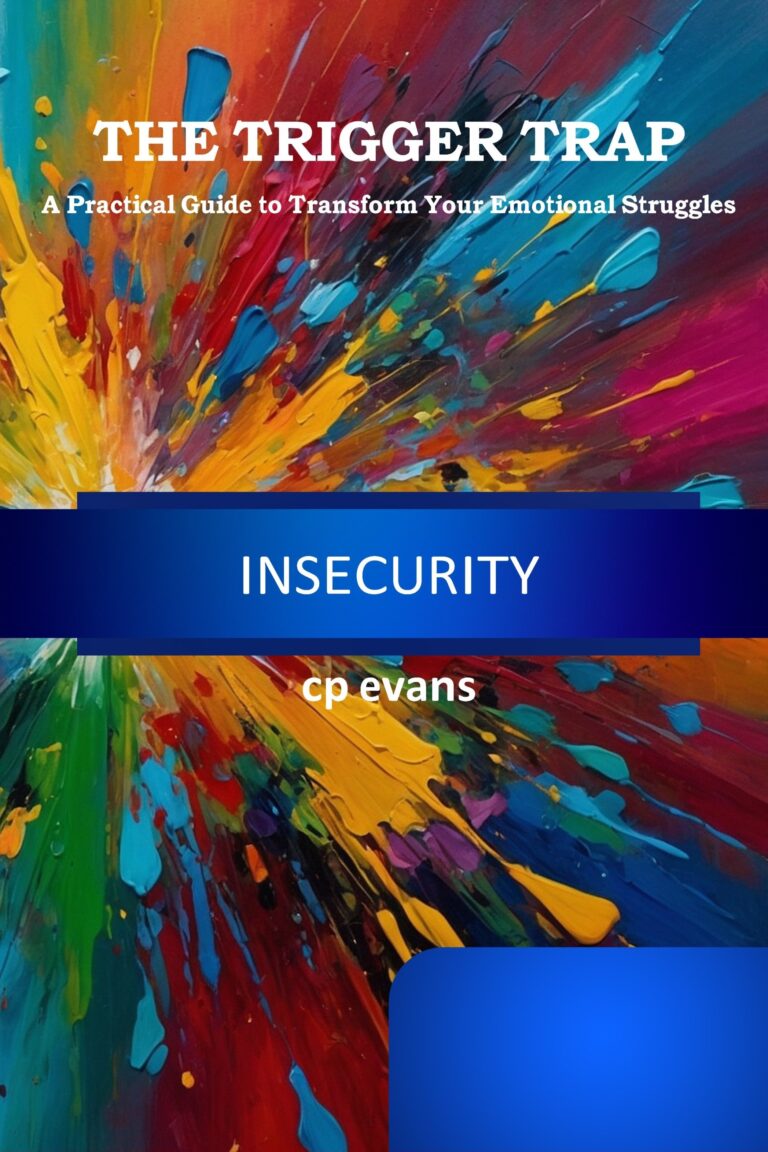
The Quiet Corner: A Note on Hope
In the bottom corner of every workbook in The Trigger Trap series, there’s a small, quiet box. At first glance, it may look like a simple design choice—empty space in the midst of vibrant, emotional chaos. But it’s not there by accident.
That box represents something sacred: hope.
It mirrors the ribbon color of the emotional trigger featured in the workbook, not as a warning, but as a symbol of mastery. The emotion hasn’t disappeared—but it’s no longer in control. It has been moved, gently, into a manageable space. It has been seen, understood, and given boundaries.
Like our real emotional lives, the canvas around it may still be messy, loud, and overwhelming. But that small box remains—a place of order, calm, and possibility. It’s a reminder that you are not your emotions. You are the one who can learn to hold them without being held captive by them.
And then there’s the design itself—subtle, but intentional. The rounded corner of that little box on the cover of each workbook is more than aesthetic. It reminds us that once we gain traction in managing our emotional triggers, those same emotions no longer cut like sharp edges. They soften. We can come into contact with them without fear. That is healing. That is growth.
You noticed the space. That means you’re already paying attention.
And that awareness is the first step.
From there, it becomes a quiet, consistent process:
Awareness → Action → Reward.
You don’t need to conquer every emotion at once. You only need to recognize one, name it, and gently guide it into its rightful place. That little box is a reminder that it can be done—that even your strongest emotions can become part of your story without becoming the whole story.
This box, this shape, this series—it’s about learning to live with what once felt impossible to carry.
And in that, there is hope.
“It seems to be written by a knowledgeable person who has studied this concept of insecurity extensively and likely dealt with their own feelings of the same.”
-B. Brasher